Introduction
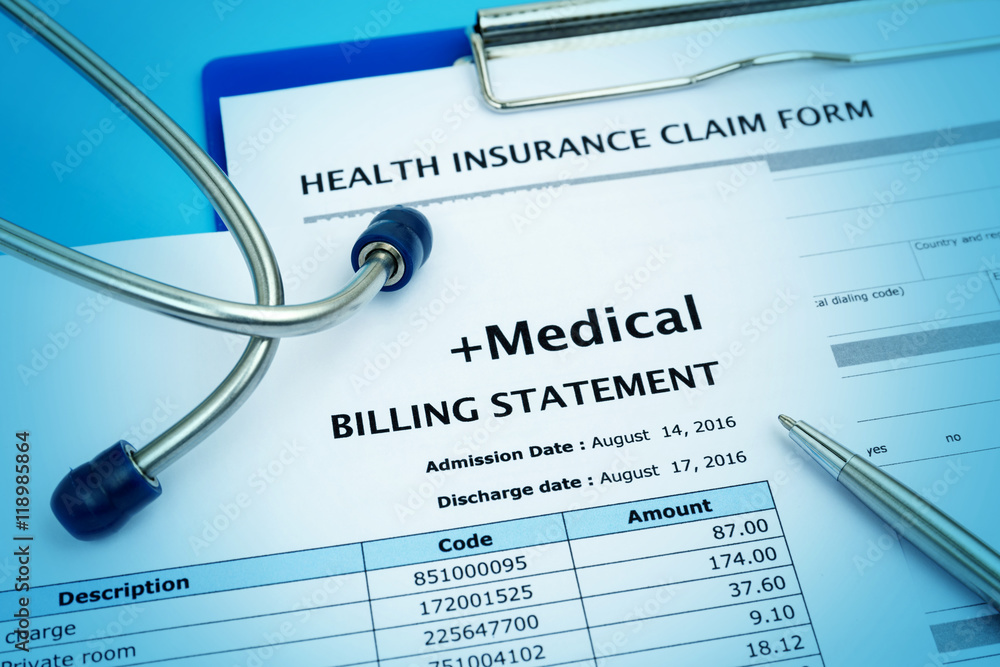
In US healthcare, billing errors are widespread and systematic. They affect both providers and patients if professional medical billing services USA are not involved. According to multiple reports, around 70% of hospital bills contain mistakes. They cost patients services they have not received, and providers face late payment issues, severe revenue loss, and increased administrative burden. Duplicate payment issues also hurt providers, and upcoded claims directly hit patients' wallets. Upcoded claims inflate costs and increase the claim denial ratio, most of which are never submitted, leading to massive financial losses. Beyond this, other common billing errors include unbundling, duplicate charges, documentation failures, and coding mistakes.
Incorrect patient information also accounts for around 25% of total annual billing errors in the country. They cause financial toxicity and erode trust in the healthcare system. In that scenario, traditional audits and rule-based systems are failing. The reason is their reactive nature; in healthcare, especially in prestigious departments, systems and approaches should be proactive. Traditional systems are not able to detect errors in modern healthcare billing. They are also unable to scale with the demand and adapt to new equipment. That's why deep learning is going to be a major part of the healthcare billing industry, as it is scalable and proactive, based on pattern-recognising systems.
The Most Common Medical Billing Errors
Coding Mistakes
The most common error is a coding mistake, as a single code mismatch can seriously harm a patient and create unnecessary medical costs. These mistakes occur when diagnostic or procedure codes are entered incorrectly rather than matching the required procedure exactly. They are usually caused by outdated software or, in some cases, because of human negligence. They result in claim denials, surprise bills for the patients, and delayed reimbursements.
Duplicate charges
Research shows that this is quite common now, as more than 40% of hospital bills contain this type of mistake. Duplicate billing in medical billing means a single service is charged more than once, which ultimately causes financial damage to the patient. In 2021, a Medicare Part B audit revealed that $11.2 billion in overpayments were due to duplicate billing. These mistakes are more than just financial; they ruin the hospital or clinic's reputation and destroy customers' trust.
Fraud
This is actually not a mistake, because it doesn't happen unintentionally or because of a software issue. It is done intentionally to grab revenue. Upcoding is the most common fraud, in which billing is done for higher‑level services than provided. Similarly, unbundling, splitting bundled services into parts and charging each of them higher than the collective amount of the bundle, is another billing manipulation. Together, all these issues contribute around $125–265 billion in annual waste.
Deep Learning in Medical Billing Services USA
How neural networks learn from historical claims
These networks are trained on massive datasets of past claims. They reveal hidden patterns of errors and fraud, as in most cases, specific patterns are used for manipulation in each field. They recognise them, which helps them understand broader human negative psychology and identify the conditions under which they occur.
This direct learning, rather than relying on static rules, builds a rapid-adapting capacity based on evolving costing practices and payer policies. They learn through data ingestion, feature learning, pattern recognition, and temporal learning techniques. The most efficient method is imbalanced data handling, which enables them to understand fraud specifically, as it is the arrest compared to legitimate claims.
Detecting anomalies in billing code sequences
Neural networks excel in anomaly detection in revenue cycle management. They treat code sequences like language, which means they learn the "grammar" of historical medical billing claims. Because they are trained on massive data, they quickly identify unusual patterns that signal fraud or errors.
The common methods they learn from include sequential modelling, in which they analyse the billing codes as ordered sequences. When they see anything appear out of the expected order, they flag it as an anomaly. Similarly, embedding representations, in which codes are converted into dense vectors, are another source of diagnosing mismatches. They learn fraud patterns, along with unsupervised detection and temporal anomalies.
Using NLP for unstructured clinical notes
These notes include discharge summaries, progress reports, and physician narratives. Because these are rich in detail, billing systems struggle to process them effectively. That's where natural language processing works. It converts the free-text into structured data that aligns with billing codes. NLP involves text preprocessing for consistency across diverse documentation styles and entity recognition for key medical concepts and relevant terms directly from physician notes.
Similarly, contextual embeddings capture semantic relationships between clinical terms, which helps identify the mismatch between billed codes and documented care provided. NLP also integrates with neural networks, as clinical notes processed through it directly feed into deep learning models. It helps find errors across structured and unstructured narratives.
Advanced Model Architectures
Sequence Models
In modern AI-driven billing management, sequence models sit at the centre stage. They play a key role because they treat medical billing codes as ordered sequences. RNNs process billing codes step by step. These networks maintain context across sequences, and you can't depend on them for long claim histories. LSTM networks are the best option to choose when it comes to long dependencies.
They use memory cells and gates, which help them capture long-range data easily. Beyond these two, transformers are another option which use self-attention. They can analyse the entire claim sequence at once. They are well known for better scaling and handling millions of claims in parallel. Hybrid architectures create robust systems to handle imbalanced datasets.
Graph Networks
Healthcare doesn't rely on isolated codes in revenue cycle management. It's a relationship among procedures, patients, and providers. GN networks model these connections as graphs. They do what sequence models can not, analysing systematic anomalies and fraud. The patient-provider code graph identifies whether providers are consistently charging high amounts for less severe diseases.
Fraud ring detection excels at spotting clusters of suspicious activity. They analyse the unusually dense connections between certain providers and specific codes to reveal especially group billing schemes. GNNs also enable systematic anomaly recognition by capturing higher-order relationships. They can also be combined with LSTMs to create hybrid models. They analyse both the sequential claim data and relational networks.
Final Analysis
Deep learning is going to transform medical billing services USA from reactive to proactive prevention. It equally helps hospitals, service providers and patients, ensuring savings of money and time for everyone. It increases fairness for patients, revenue for hospitals, and customer trust for insurers. For maximum depth and breadth, hybrid models are highly recommended. Along with that, human insights are very crucial because AI can only flag the anomalies. It's human staff who validate them and correct them, avoiding false positives. Agencies should also check the training data against bias to avoid systematic errors. Focusing on explainability helps make deep learning decisions transparent. Smooth integration of AI with legacy systems enhances accuracy and workflow efficiency.